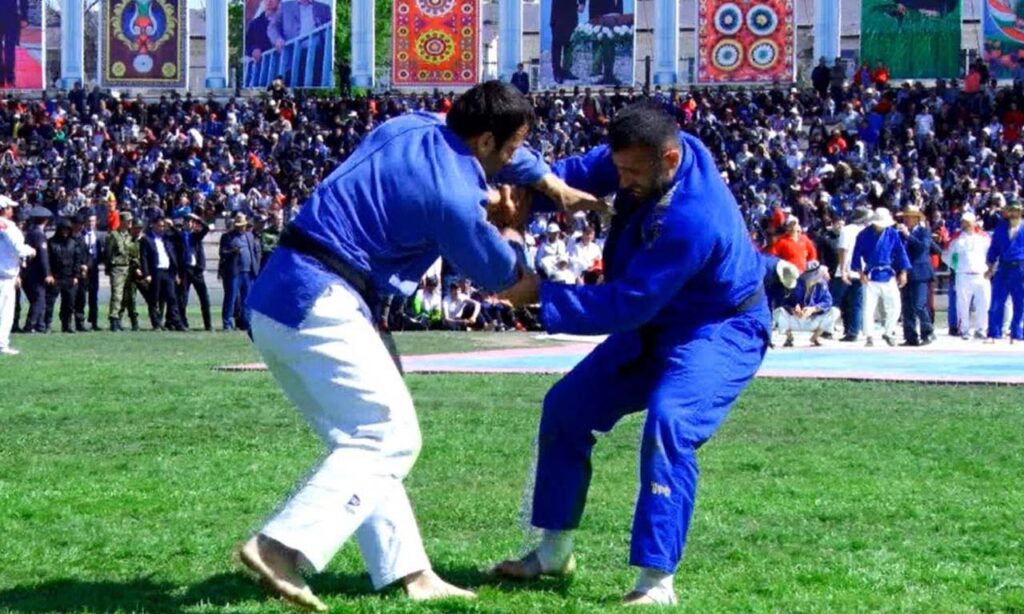
Gushtini Milli Kamarbandi is a traditional Tajik belt wrestling style. The name itself reflects its meaning: “gushtin” means wrestling, “kamarband” means belt, and “milli” means national. This ancient form of wrestling has a rich history and is considered one of the oldest types of sport.
Belt wrestling developed from the realities of combat. A warrior on horseback kept his feet in the stirrups, and using his legs in a fight could cause him to fall from the saddle. Therefore, during training in peaceful times, fighters avoided using their legs, reproducing real battle conditions. However, during combat, a rider could find himself on the left or right side of the opponent. This led to the development of throws involving stepping behind the opponent’s left or right leg.
A warrior needed strong hands, elbows, forearms, shoulders, and back. The pulling strength of the arms, shoulders, and back could decide life or death in a moment. As a result, training focused on building exceptional pulling power and mastering explosive techniques such as chest throws, stepping throws, sweeps, lifts, and throws that take the opponent behind the back.