An international platform for ethnosport and culture.
The project was initiated by the Kyrgyz Republic in 2014 to preserve and promote the heritage of nomadic civilizations through sport, culture, and traditional knowledge. Each year, the Games expand their geography, scale, and cultural significance, becoming a global stage for the intangible heritage of the peoples of the world.
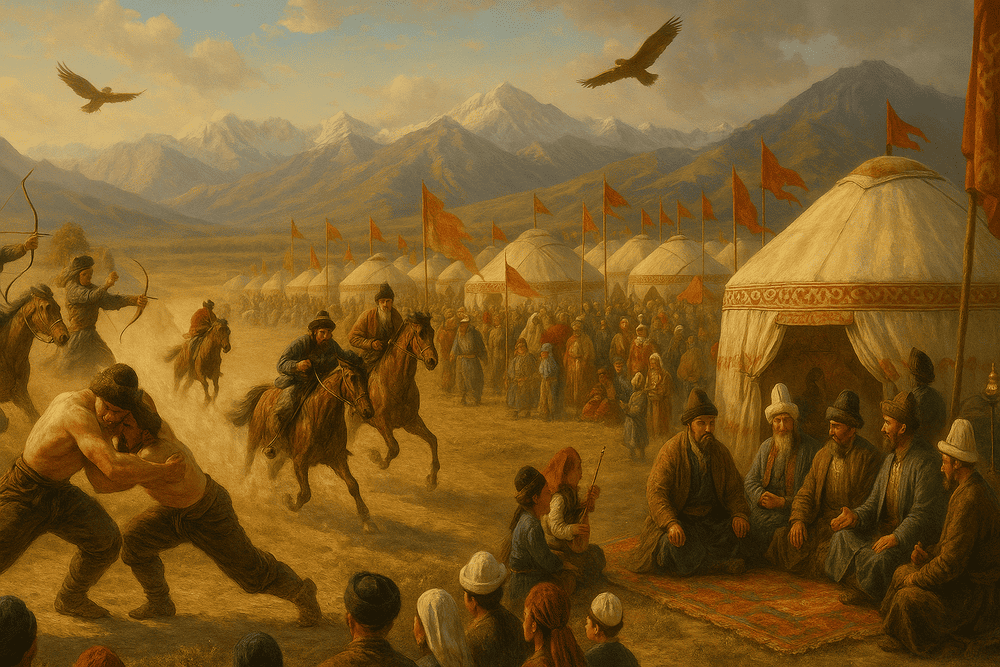
The roots of the World Nomad Games trace back to the epic "Manas" — one of the greatest heroic masterpieces in world literature. In the episode Kokotaydyn ashy, an event is described where people gathered for competitions, horse races, wrestling, and diplomacy — an early prototype of the Games as a space of unity through sport and ritual.
Manas is not only an epic of heroism but also a testament to a culture passed down through movement, knowledge, and the power of tradition. It is from this idea that the Games were born — as a modern platform where the ancient spirit meets the present.
September was chosen for the Games for a reason: in nomadic culture, this period marks the end of seasonal migration. A new cycle began with a toy — a celebration with rituals, games, and gatherings. Thus, the Games continue this tradition: the end of a journey becomes a moment for unity.
How It All Began
The first three editions of the Games were held in the city of Cholpon-Ata (Kyrgyzstan):
The World Nomad Games are recognized by the United Nations as an effective instrument of intercultural dialogue;
They are supported by international sports federations and cultural institutions;
The Games are included in the global sustainable development agenda;
UNESCO has highlighted the event as a significant contributor to the preservation of intangible cultural heritage.
Evolution of the Format
The Games have grown from a national event into a global cultural platform. Today, they include:
Competitions in ethnic sports;
Ethno-town, ethno-bazaar, and cultural festivals;
International symposia and conferences;
Craft workshops and educational programs;
Showcases of traditional arts, cuisine, and fashion
What Lies Ahead:
World nomad games 2026
The upcoming edition will mark a symbolic return to the origins — to the place where the idea of the Games was born as a global platform for cultural respect and forward movement.
The 2026 Games will bring together more than 90 countries, dozens of ethnosport disciplines, and cultural events, while preserving their core mission: